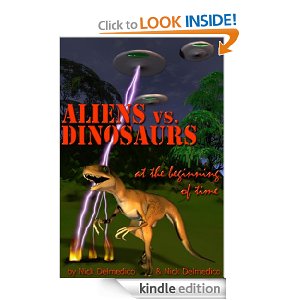
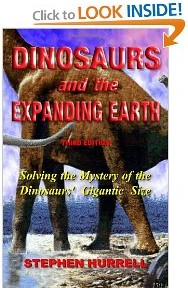
Why Palaeontologists and Paleontologists are Wrong!Palaeontology is the study of fossils of animals and plants. Palaeontology does not include astrophysics! So many palaeontological theories are based on information that palaeontologists know and does not take into account more astronomical ideas. By combining the two fields it is possible to come up with a completely different view of the Earth as it was during the dinosaur period, rather than just assuming the Earth itself has stayed the same and only the animals have changed. Palaeontologists believe that as many dinosaurs were lizards and as many lizards are cold blooded, then it had to be hot for them to survive. Recently more and more dinosaurs have proven to not be lizards but be birds, and so the old hot weather theory is no longer relevant. During the cretaceous period there were a lot of conifer and fern forests. Conifers love cold weather and humidity. Therefore, the temperature during the dinosaur period was cold with lots of rain, not hot as many paleontologists believe. Dinosaurs, therefore, were in cold weather most of the time. Probably cold and windy weather. The best defense against cold and windy weather is a nice matt of features over almost every inch of the body, like emus and ostriches or penguins. The dinosaurs were massive creatures, able to run at high speeds to be able to make great strides according to footprint records. Yet current paleontological research suggests that the humongous apatosaurus had to stay in the water just to remain upright due to its great size. But palaeontology does not take into account that all planetary and star bodies in the universe continue to expand. They don't have that research behind them. The Earth continues to expand by 100 tonnes a day thanks to the gas and dust it absorbs (reference: NASA) in its orbit around the sun and the orbit of the sun around the galaxy. Work backwards and you get a much smaller Earth with much lighter gravity. Palaeontologists focus on fossils and compare them to modern day creatures but the period of time between fossilisation and current animals is rarely looked at. If you consider the entire history of flora and fauna there is a progression of shrinkage across the board. As the Earth gets slowly larger, animals get slowly smaller to compensate for the increasing gravity. Palaeontologists say that many of the birds in the dinosaur era could not fly. They probably hopped along or only launched from heights. This makes no sense at all. Why would any bird evolve wings if it meant they had to keep climbing mountains or trees to fly? There are better things to come up with. Also, a bird that can't fly is an easy target for a carnivore so they'd all be eaten, just like we killed off the dodo pretty quickly. Instead, as the gravity was lighter, all these 'flightless' birds could definitely fly. Also, as the gravity was lighter, those vestigial limbs on tyrannosaurus rex could have wings under to be used to help it slow down or balance itself in the lower gravity. If you imagine the gravity on the moon as the gravity on the Earth at the time, you could see how a tyrannosaurus rex could be running with leaps and bounds but then need to find a way to stop. Small wings would enable it to make use of air pressure to balance as it landed, much like chickens do today. One more thing. There is the theory of Pangaea, the massive land mass that existed at least 300 million years ago. Current science suggests it was just one big mass in the middle of the northern hemisphere. This makes no sense either as why would the Earth form a block of land in one place? That would make it top heavy in its orbit and wobble a lot. Probably crazy weather patterns which would make it very difficult for many animals and plants to evolve in those conditions. Instead, if the Earth was smaller and colder with most of the water at the poles or frozen at the top of mountains or in the air as humidity, the land mass would cover most of the Earth and we'd only have a few inland seas. The spin and the constant pull from the gravity of the sun would make sure the land was evenly spread around the planet. The moon would also make sure the land was spread evenly on a small planet. That way the Earth would be in a more stable orbit with a stable climate and animals could evolve across the land. Okay, there are other things that you can find when you start combining sciences. My challenge for you is to work out which sciences to use to confirm that it wasn't an asteroid that hit the Earth, it was a comet! Thanks for reading.
Other sites by Neil A Hogan: Alien Characters | Ghost Characters | Neil A Hogan's Blog | Animated Alien Characters |
 |